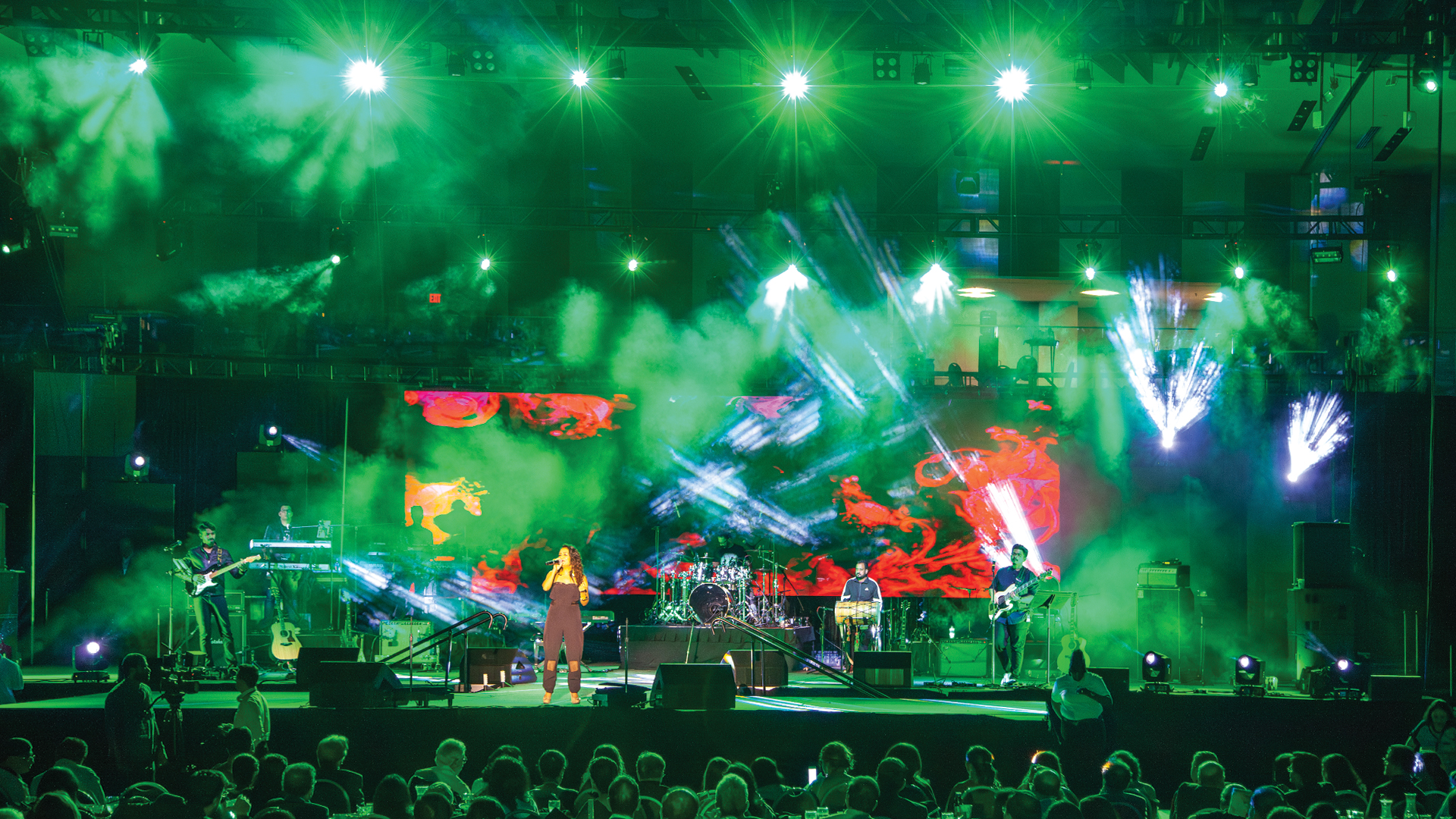
Attendees entering the automotive launch noticed something subtle but effective: the ambient soundscape featured engine notes, wind sounds, and subtle musical elements that reinforced the brand’s identity without demanding attention. This accent audio approach uses sound strategically for theming and branding purposes—creating atmosphere that supports event messaging while remaining below conscious attention thresholds.
Understanding Sonic Branding
Sonic branding extends brand identity into audio elements that reinforce recognition and emotional associations. Just as visual branding uses consistent colors and typography, sonic branding uses consistent audio elements—signature sounds, musical motifs, and acoustic textures. Intel’s bong, Netflix’s ta-dum, and McDonald’s I’m Lovin’ It melody demonstrate sonic branding at its most effective—instantly recognizable audio signatures that trigger brand associations without visual support.
Events can extend these sonic identities into environmental audio that maintains brand presence throughout experiences. Background music featuring brand-associated artists, ambient textures aligned with brand personality, and strategic use of signature sounds at key moments create immersive brand environments. Agencies like Man Made Music and Sixième Son specialize in creating sonic brand identities that translate into event applications.
Technical Implementation
Distributed speaker systems deliver accent audio throughout event spaces. Ceiling speakers, hidden speakers integrated into scenic elements, and directional speakers from Holosonics that focus sound in specific zones enable audio environments that vary across spaces. DSP platforms from QSC Q-SYS, Biamp Tesira, and Symetrix Radius manage multi-zone playback, enabling different content in different areas while maintaining cohesive overall experience.
Level management proves critical for accent audio success. Content playing too loudly competes with conversation and becomes fatiguing; content too soft disappears beneath ambient noise. Automatic gain adjustment that responds to ambient noise levels maintains appropriate balance as room conditions change—louder during busy periods, softer during quiet moments. This dynamic management keeps accent audio effective without requiring constant operator attention.
Content Creation Approaches
Generative audio systems create endless non-repeating soundscapes from defined parameters. Platforms like Max/MSP, Pure Data, and Ableton Live with generative plugins produce evolving textures that maintain interest over extended periods. Unlike looped content that becomes recognizably repetitive, generative content continues evolving—essential for multi-day events where the same music looping becomes tedious.
Licensed music requires appropriate rights clearance for event use. Performance licenses from ASCAP, BMI, and SESAC cover live performance of copyrighted music; synchronization licenses may be required for music accompanying video content. Production music libraries from Epidemic Sound, Artlist, and Musicbed offer simpler licensing for event applications.
Accent audio represents a subtle but effective production tool. Events that invest in thoughtful audio environments create experiences that feel more polished, more immersive, and more memorable than those relying solely on visual elements. Sound shapes perception unconsciously—productions that harness this power enhance their events without audiences necessarily recognizing the technique.
