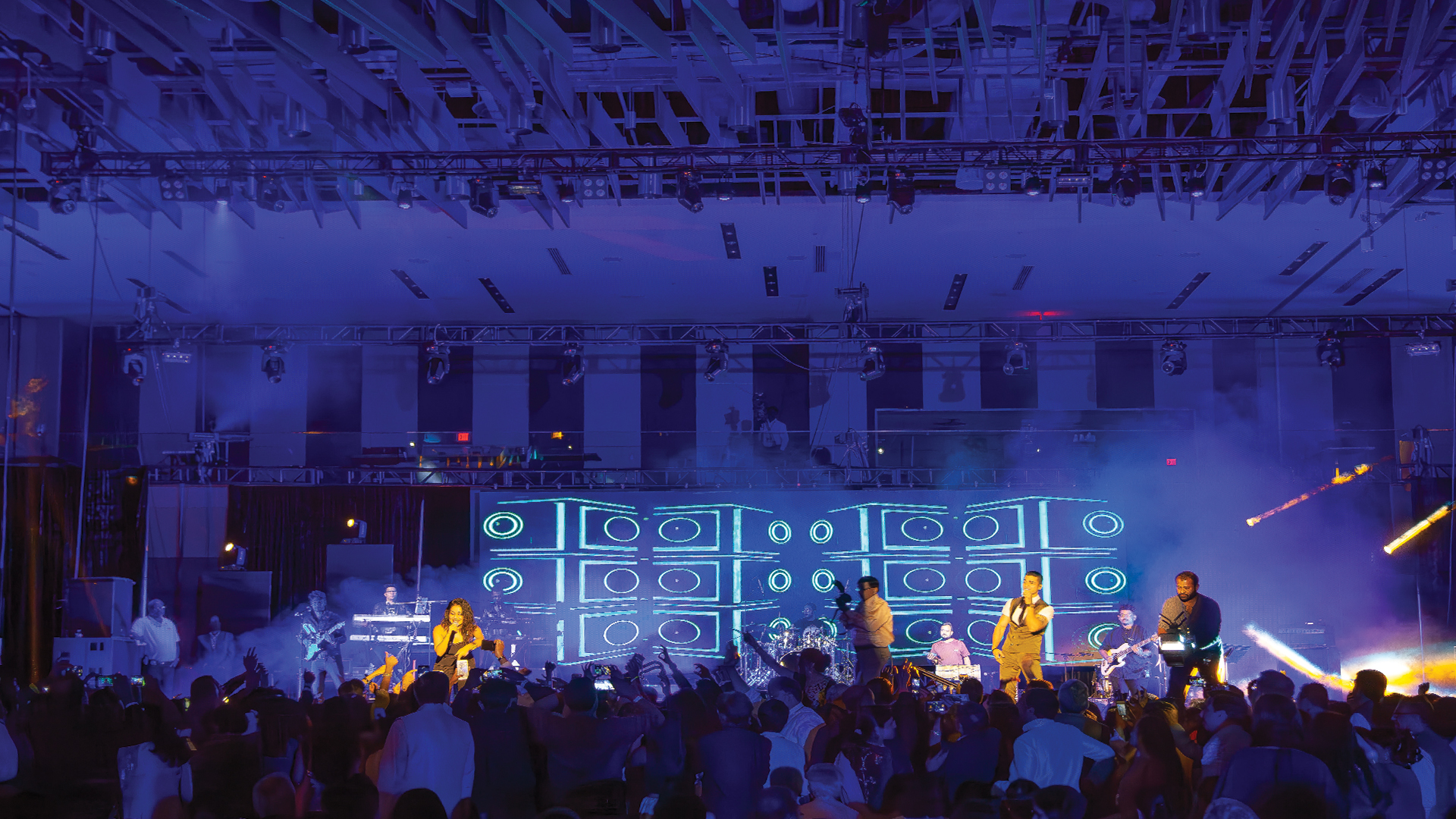
The broadcast looked perfect through the viewfinder until playback revealed horizontal bands rolling through the LED wall that nobody saw during the live shoot. This scan line artifact resulted from a mismatch between LED refresh speed and camera shutter settings. Understanding why LED refresh rates matter for live cameras enables production teams to prevent these problems and achieve broadcast-quality results from LED wall backgrounds.
The Technical Reality of LED Scanning
LED panels don’t illuminate all pixels simultaneously they scan through rows sequentially, with each row illuminating briefly before the next activates. The refresh rate (measured in Hertz) indicates how many complete scan cycles occur per second. A 3840Hz refresh rate means the entire panel scans 3,840 times per second. Human vision perceives this rapid scanning as continuous illumination, but cameras with fast shutter speeds capture individual moments where portions of the panel are dark.
Scan multiplexing ratios compound the challenge. A 1/8 scan panel illuminates only one-eighth of its rows at any instant, cycling through all eight groups to create the complete image. Higher scan ratios (1/4, 1/2, or full-scan) illuminate larger portions simultaneously, reducing camera sensitivity but increasing cost. Products designed for broadcast like the ROE Visual Black Pearl and Sony Crystal LED specify high scan ratios specifically because camera capture represents their primary use case.
Camera Settings That Prevent Artifacts
Shutter speed selection directly affects scan line visibility. Faster shutter speeds (1/500, 1/1000) capture briefer moments, increasing the likelihood of catching partial scans. Slower shutter speeds (1/60, 1/50) expose for longer durations, integrating multiple scan cycles into each frame. The 180-degree shutter rule from cinematography—setting shutter speed to double the frame rate—provides a starting point, but LED capture often benefits from even slower shutters when motion blur is acceptable.
Genlock synchronization aligns camera and LED panel timing, ensuring consistent relationships between shutter exposure and panel scan phases. Brompton Technology processors include genlock inputs that accept reference signals from broadcast infrastructure. When camera shutter and LED refresh are synchronized, each frame captures consistent scan phases rather than random relationships that produce varying artifacts frame to frame. This synchronization represents standard practice for broadcast and virtual production applications.
Refresh Rate Specifications for Different Applications
Casual photography and smartphone video generally work acceptably with panels rated 1920Hz or higher—the relatively slow shutters these devices typically use integrate sufficient scan cycles. Professional broadcast with dedicated cameras benefits from 3840Hz or higher refresh. High-speed capture for slow-motion playback demands even higher refresh rates—7680Hz or more—because the fast shutter speeds required for high frame rate capture are extremely sensitive to scan artifacts.
Testing with actual equipment under actual conditions remains essential regardless of specifications. Different cameras exhibit different sensitivities; different LED products perform differently despite similar ratings. Shooting test footage before production—at various shutter speeds, with and without genlock—reveals the specific behavior of the actual equipment combination planned for the event. This testing investment prevents the unpleasant surprise of discovering artifacts only when reviewing footage after irreplaceable moments have passed.
