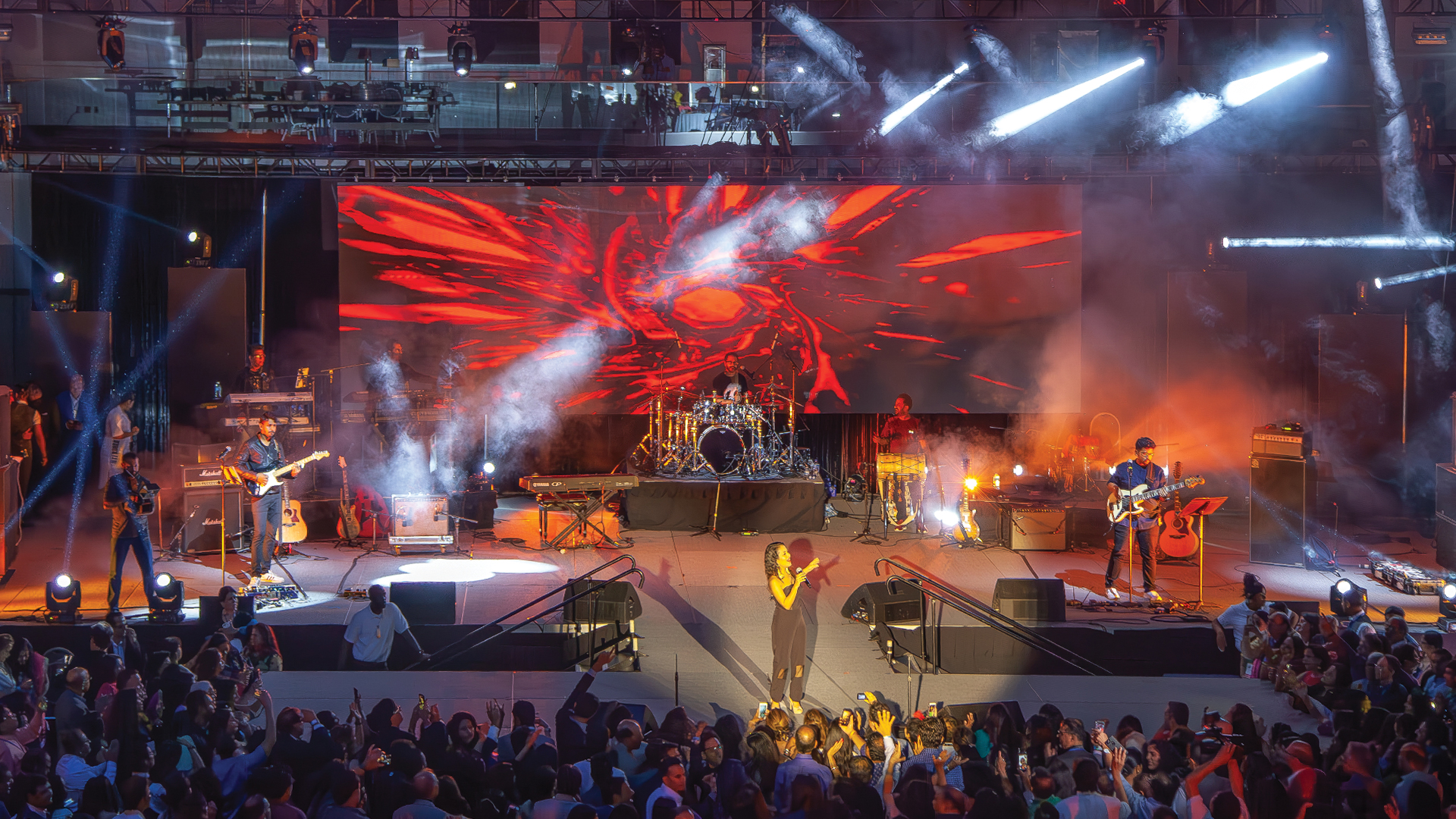
When Video Walls Attack
The LED video wall represents one of modern production’s most impressive visual tools. These seamless displays of individually addressable pixels can create environments impossible to achieve through any other means. They can also create visual disasters that overwhelm audiences, confuse cameras, and turn carefully designed shows into seizure-inducing nightmares.
The potential for optical chaos increases with every pixel added to a system. A small LED screen showing wrong content is a minor embarrassment; a 60-foot curved wall displaying corrupted video at maximum brightness becomes a safety concern. Understanding how these failures occur helps production professionals prevent them—or at least respond effectively when prevention fails.
The Technology Behind Modern LED Walls
Contemporary LED video technology uses surface-mount device (SMD) LEDs arranged in precise grids across modular panels. Manufacturers like ROE Visual, Absen, Unilumin, and Brompton Technology have refined these systems to remarkable reliability. Pixel pitches have shrunk from 10mm in early installations to under 1mm in current premium products, enabling resolution that rivals traditional displays.
The signal path from content source to displayed image involves multiple processing stages. Video servers like Disguise or Green Hippo generate content, which passes through LED processors (often Brompton Tessera or NovaStar) that convert video signals into the specific data format LED panels require. Each conversion point presents opportunities for problems to emerge.
Common Failure Modes
Mapping errors create some of the most visually striking failures. LED processors must know exactly how physical panels are arranged to send correct pixel data to each location. When mapping doesn’t match physical reality—panels numbered incorrectly, orientation flags set wrong, or processing patches misaligned—the resulting image fragments across the wall in patterns that would impress abstract artists but horrify production designers.
Data distribution failures produce different symptoms. LED walls receive pixel data over fiber optic or ethernet connections distributed from processing nodes. When cables fail, switches malfunction, or receiving cards lose connection, sections of the wall go dark or freeze on their last received image. The ROE Visual Black Pearl panels include redundant data paths that help survive single-point failures, but not all products offer this protection.
Brightness and Color Catastrophes
LED panels capable of producing 5,000+ nits of brightness for outdoor daylight viewing become dangerous when that output releases indoors without appropriate limiting. Processors include brightness controls, but incorrect configuration can result in output levels that cause physical discomfort for viewers and potentially trigger photosensitive reactions in susceptible individuals.
Color calibration failures produce walls where individual panels display noticeably different colors despite receiving identical signals. Manufacturing variations, age-related LED degradation, and calibration data corruption all contribute to visible seams between panels. The Brompton Tessera SX40 processor includes sophisticated calibration tools, but using them effectively requires training and time that productions sometimes lack.
The Moire Nightmare
Moire patterns occur when the LED pixel grid interacts with camera sensor grids to produce interference patterns not visible to the human eye but painfully obvious on recorded or broadcast footage. The effect appears as shimmering bands or swirling patterns that move as cameras pan, creating footage that looks like visual static overlaying the intended image.
Preventing moire requires careful attention to pixel pitch selection, camera distance, and processor refresh rate settings. The Brompton Hydra calibration system specifically addresses moire through proprietary processing that varies pixel timing to disrupt interference patterns. Without such tools, productions discover moire problems only during camera tests—sometimes too late for correction.
Case Study: The Concert Film Disaster
A major artist’s concert film production encountered cascading LED failures that threatened the entire project. The production design featured a massive curved LED backdrop spanning 120 feet wide and 40 feet tall—over 25 million pixels displaying custom visual content synchronized with the performance.
During the third song of filming, a section representing approximately 15% of the wall suddenly displayed corrupted content—scrambled colors, strobing white patches, and frozen fragments of previous images. The video engineer traced the problem to a fiber converter that had overheated, but replacing it required accessing equipment hidden behind the massive LED structure.
Emergency Response
The production team faced difficult choices. Stopping the show meant losing the audience energy essential for concert footage. Continuing meant filming with visible technical problems. The media server operator devised a creative solution—modifying content in real-time to avoid the affected area, essentially creating an impromptu letterbox effect that masked the corrupted section.
Post-production editing later addressed the affected footage through careful color grading and strategic cropping. The final film showed no evidence of the technical crisis, but the production cost significantly exceeded budget due to extended editing time. The incident prompted industry-wide discussion about redundancy requirements for mission-critical LED installations.
Refresh Rate and Scan Line Issues
LED panels refresh their display many times per second, typically at rates from 1920Hz to 7680Hz or higher. Cameras with global shutters capture these refreshes cleanly, but rolling shutter cameras—common in broadcast and cinema applications—can capture partial refresh cycles that appear as horizontal bands across the image.
The genlock synchronization between cameras and LED processors helps address this issue, but requires careful configuration. The Tessera processor can accept external sync signals that align panel refresh with camera capture timing. Without proper synchronization, footage contains distracting artifacts that no amount of post-production can fully correct.
Prevention Strategies
Redundant signal paths provide the most reliable protection against LED failures. Premium installations use dual fiber runs to each processing node, with automatic failover when primary paths fail. The NovaStar MCTRL4K controller supports hot backup configurations that maintain display continuity even during equipment failures.
Comprehensive testing before audiences arrive reveals problems while solutions remain possible. Test patterns that stress-test every pixel, color sweeps that expose calibration issues, and camera tests that reveal moire or scan line problems should be standard practice. The time investment pays dividends in avoided crises.
Thermal Management
LED panels generate significant heat, and thermal management directly affects reliability. Panels operating near thermal limits experience increased failure rates and accelerated calibration drift. Proper ventilation, adequate spacing from heat-generating sources, and attention to ambient temperature conditions prevent heat-related failures.
The HVAC requirements for LED walls often surprise production teams. A large video wall can generate heat equivalent to dozens of space heaters, overwhelming venue cooling systems not designed for such loads. Pre-production coordination with venue engineering prevents the gradual temperature rise that leads to equipment failure during extended events.
Content-Related Failures
Sometimes LED walls function perfectly while displaying content that creates problems. Strobing effects that exceed safe frequencies, high-contrast patterns that cause visual discomfort, and color combinations that appear fine on preview monitors but overwhelm in large-scale display all represent content-related failures rather than hardware issues.
The Harding Test used by broadcasters to evaluate content for photosensitive seizure risk should be applied to LED wall content, particularly for public events. Software tools analyze video files for problematic sequences, identifying potential issues before content reaches massive displays where effects are magnified.
The Human Element
Operator error contributes to many LED failures. The complexity of modern media server software like Disguise, Notch, and TouchDesigner requires extensive training that not all operators receive. Incorrect layer ordering, wrong output mapping, and content format mismatches all produce visible problems that trace to human decisions rather than equipment failure.
Building operator expertise takes time and investment that production budgets don’t always accommodate. The pressure to execute increasingly complex video designs with insufficient preparation time creates conditions where human error becomes inevitable. Industry organizations increasingly advocate for realistic scheduling that allows proper system programming and testing.
Moving Forward
LED technology continues advancing, with each generation offering better reliability alongside increased capability. MicroLED technology promises even finer pixel pitches and improved color accuracy. Processing systems grow more sophisticated, incorporating artificial intelligence for automatic calibration and problem detection.
The fundamental challenge remains unchanged: complex systems create complex failure modes. Production professionals who understand LED technology’s capabilities and limitations, who invest in proper testing and redundancy, and who prepare contingency responses create spectacular visual experiences. Those who assume technology will simply work often discover otherwise—sometimes in front of thousands of viewers.
