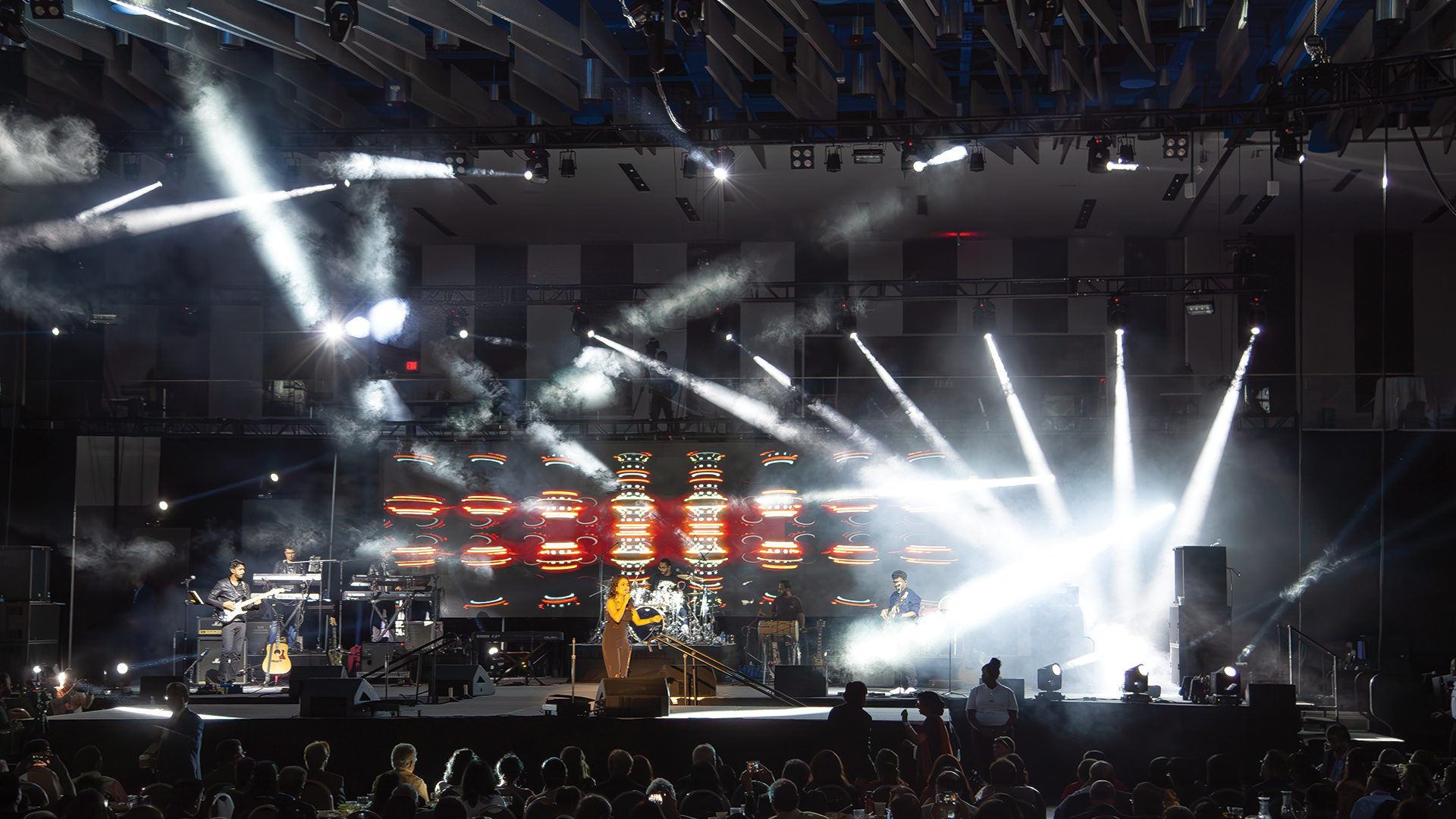
The fundamental promise of a theatrical lighting fixture is control—the ability to command intensity from darkness to full output and everywhere in between. When fixtures develop independence and refuse to follow dimming commands, the results challenge every assumption about lighting design reliability.
The ETC Source Four Revolution
The ETC Source Four defined a generation of theatrical lighting—reliable, efficient, and predictably controllable. Master electrician Jennifer Santos encountered a Source Four that developed convictions about appropriate brightness during a 2020 theater production.
“We had 48 Source Fours on a conventional rig, all fed from ETC Sensor dimmer racks. Unit 23, hung center stage for key light, decided that 70% was its minimum acceptable output. The dimmer curve would respond normally from 100% down to about 72%, then just… stop. Anything below that command, the fixture held at 70%.”
Diagnosing the Dimmer Dilemma
The investigation consumed several tech hours. “We swapped fixtures—the problem followed the circuit, not the instrument. We swapped dimmers—the problem stayed with the original circuit. We verified DMX signal integrity using a Swisson XMT-350 tester—clean data all the way to the dimmer. The dimmer was receiving correct commands and refusing to execute them below a certain threshold.”
The culprit was a failing IGBT component in the dimmer module that had developed a minimum firing angle. “The component wasn’t completely failed—it would still dim, just not below its new self-imposed limit. We replaced the module and the fixture rediscovered its full range.”
The Martin MAC Encore Color Temperature Standoff
The Martin MAC Encore Performance brought LED technology to the theatrical market with impressive color control and dimming characteristics. Lighting programmer David Williams deployed Encores for a dance production and encountered resistance to low-end commands.
“The fixtures dimmed beautifully from 100% to about 15%. Below that, the LED dimming curve became erratic. Some fixtures would continue dimming smoothly. Others would step down in visible increments. Three fixtures simply held at 15% regardless of lower commands, then snapped to black at zero.”
The issue involved PWM frequency and LED driver calibration variations between fixtures. “We had units from different manufacturing runs with slightly different driver characteristics. A firmware update from Martin addressed the issue for most units, but three required hardware adjustment at the service center.”
Historical Context: The Evolution of Dimming Technology
The history of theatrical dimming begins with resistance dimmers—rheostats that controlled light by converting electrical energy to heat. The salt water dimmer systems of the early 20th century used electrodes in brine tanks, where electrode depth controlled resistance and thus light output.
The SCR (silicon-controlled rectifier) dimmer revolution of the 1960s brought phase-control dimming to the mainstream. Strand Electric and Kliegl Brothers developed rack systems that could control hundreds of circuits from a central location—the architecture that still underlies conventional dimming today.
The Robe BMFL Network Rebellion
The Robe BMFL Spot represents the cutting edge of automated lighting—powerful, fast, and feature-rich. System tech Sarah Park deployed a BMFL rig for a touring concert and discovered network-related dimming issues.
“We had 40 BMFL Spots receiving Art-Net from a Luminex network infrastructure. During the show, random fixtures would occasionally ignore intensity commands while continuing to respond to color and position. The dimmer channel was receiving data—we could see it in the fixture’s DMX monitor mode—but the fixture wasn’t executing.”
The Network Priority Discovery
Investigation revealed a network timing issue. “The fixtures were receiving Art-Net packets and RDM queries simultaneously. Under certain timing conditions, the RDM traffic was causing the fixtures to briefly drop into a diagnostic mode that froze intensity. We separated RDM traffic to a different network segment and the problem disappeared.”
The Chauvet Professional COLORado Panel Conspiracy
The Chauvet Professional COLORado Panel series provides versatile LED wash fixtures for various applications. Production electrician Marcus Webb deployed COLORado Panels for a corporate event and encountered coordinated resistance.
“An entire row of panels—eight fixtures—would simultaneously refuse to dim below 40%. Not one fixture, all eight, at the same time. They’d respond normally for 20 minutes, then lock up together. The pattern suggested some kind of communication between them, but they were on separate DMX universes.”
The cause was electrical, not data-related. “The panels shared a power distribution circuit that was experiencing intermittent voltage sag. When voltage dropped below a certain threshold, the fixtures’ internal power supplies would limit current draw by refusing to dim. They were protecting themselves from brownout damage by holding at a sustainable output level.”
The Ayrton Ghibli MPC Mystery
The Ayrton Ghibli MPC offers exceptional optical performance in a compact moving head package. Lighting designer Elena Vasquez specified Ghiblis for a theatrical installation and encountered selective dimming compliance.
“The fixtures would dim perfectly in certain color combinations but resist dimming in others. Red would dim smoothly. Blue would dim smoothly. But cyan—made from the combination of green and blue LEDs—would dim erratically. At certain intensity levels, the cyan would shift toward green as the blue LED array responded differently than the green.”
The issue related to LED color calibration at low output levels. “LED efficiency varies by color temperature, and at low intensities, the calibration that maintains color consistency can struggle. The fixture firmware update from Ayrton included improved color tracking algorithms for low-intensity operation.”
Practical Dimming Diagnostics
Diagnosing dimming failures requires systematic isolation of variables. The first step is verifying control signal integrity—confirming that the console is actually sending the commands you expect.
DMX testers like the Chauvet Professional DMX-RT or Swisson XMT-350 can verify signal at various points in the distribution chain. If the signal is correct but the fixture isn’t responding, the problem lies in the fixture itself or its power supply.
Power Quality Assessment
LED fixtures are particularly sensitive to power quality issues. Voltage sags, harmonics, and frequency variations can all affect dimming behavior. A power quality analyzer can reveal problems that multimeters miss.
Isolating fixtures on dedicated power circuits helps determine whether dimming issues relate to shared electrical infrastructure. If the same fixture dims properly on one circuit but not another, the power system rather than the fixture needs attention.
The relationship between command and execution in lighting control depends on countless interdependent systems—data networks, power distribution, firmware, and physical components all must align. When fixtures refuse to dim, they’re usually responding to conditions we haven’t recognized rather than simply misbehaving. The diagnostic skill lies in asking the right questions until the fixture reveals what it’s reacting to.
