There exists a particular category of AV production experience that transcends ordinary professional challenge—the night where everything breaks simultaneously, where backup plans fail their backup plans, and where the only path forward is sheer collective determination. These events forge production crews into unbreakable teams and generate stories that become industry legend. This is the anatomy of survival when live event production descends into beautiful chaos.
Setting the Stage for Disaster
The venue was a converted warehouse in the industrial district—twenty thousand square feet of exposed brick, concrete floors, and original timber beams that the event designer insisted would create “raw authenticity.” The client: a tech startup celebrating their Series B funding with an announcement party for three thousand guests, including major venture capital partners and media representatives. The technical rider called for concert-level production: L-Acoustics K2 line arrays, a 60-foot LED video wall built from ROE Visual Carbon CB5 panels, and an intelligent lighting rig featuring seventy-two Robe MegaPointe fixtures.
The production manager had flagged concerns during site surveys. The building’s electrical infrastructure dated from the 1940s and had never been upgraded for entertainment-level power demands. The client’s venue coordinator assured everyone that “an electrician had looked at it.” This phrase, delivered with confident vagueness, would haunt the crew for weeks afterward.
The Load-In: Warning Signs Ignored
Load-in began at 6 AM on show day—already an aggressive timeline for a production of this scale. The rigging crew from Mountain Productions identified the first problem: the timber beams, while aesthetically magnificent, offered inconsistent load-bearing capacity. The structural engineer on call authorized ground support towers for the heavy LED wall sections, adding three hours to the build schedule. The CM Lodestar motors designated for the lighting rig required redistribution across additional points, complicating the CAD drawings the programmer had built in Vectorworks.
By noon, the video engineer discovered that the Brompton Tessera SX40 processors driving the LED wall were receiving inconsistent power. The venue’s electrical panels showed voltage fluctuations between 108V and 124V—a variance that would stress any processor but proved particularly problematic for the precision timing required by high-resolution LED processing. A frantic call to the rental house produced a Chauvet Professional PVP X6IP generator that arrived at 3 PM, reducing the programming window to three hours.
When the House Power Surrendered
Doors were scheduled for 7 PM. At 6:47 PM, as the FOH engineer ran final system checks on the Avid VENUE S6L console, the venue’s main electrical breaker tripped. The warehouse plunged into darkness. Emergency lighting—powered by a separate circuit—provided dim illumination while the production team processed what had happened. The generator powering video was unaffected. Everything else was dead.
The venue’s facilities manager, located eventually in a back office, revealed that the breaker was “original to the building” and had “never been tested at full load.” This information, while technically accurate, proved unhelpful for the three thousand guests arriving in thirteen minutes. The production manager made a decision that would define the night: split the team, solve parallel problems, meet at the other end.
The Audio Solution: Improvisation Under Pressure
The A1 audio engineer assessed the situation. The L-Acoustics amplifier racks required more power than any portable generator could provide, but the video generator had capacity to spare. In consultation with the systems engineer, they made a controversial call: disconnect the main PA system and deploy the delay speakers as the primary system. The L-Acoustics A10 boxes designated as delays drew significantly less power than the K2 mains, and their integrated amplification simplified the power distribution problem.
The audio crew worked with precision born of experience. Within twenty minutes, they had repositioned six A10 cabinets and four KS21 subwoofers, running all Dante audio networking through a single L-Acoustics LA12X amplifier that could operate from the generator. The coverage pattern was imperfect—the back third of the venue would have compromised high-frequency response—but the system would function.
Lighting: The Dark Art of Reduction
Meanwhile, the lighting designer faced an impossible calculation. Seventy-two MegaPointe fixtures at full intensity draw approximately 250 watts each—eighteen kilowatts of lighting alone, not counting LED wash fixtures and architectural elements. The generator could support perhaps six kilowatts of additional load beyond the audio requirements. The designer made surgical cuts, selecting twelve MegaPointes based on their programmed positions for the CEO’s announcement sequence, and powering down everything else.
The grandMA2 console needed reprogramming—the show file assumed all fixtures operational. With forty-five minutes until the keynote announcement, the programmer rebuilt critical cues using the reduced fixture count. The Notch real-time graphics that had been designed to map across the full rig were abandoned. In their place: simple gobo projections and color washes that would work with whatever fixtures survived.
Video: The Backbone That Held
The LED video wall became the production’s anchor. Protected by the independent generator, the ROE Carbon panels continued displaying content while the crew rebuilt systems around it. The media server operator running disguise d3 recognized that the reduced lighting would shift visual emphasis entirely to video content. In real-time, she adjusted output levels and contrast to compensate for the darker ambient environment, essentially re-grading the show’s visual language on the fly.
The Blackmagic ATEM Constellation 8K switcher coordinating live camera feeds operated from its own UPS backup—a redundancy investment that had seemed excessive during budget negotiations but now proved invaluable. Three camera operators using Sony PXW-FX9 cameras continued capturing the event, their footage showing a crowd blissfully unaware of the backstage chaos.
The Human Factor: Communication Under Fire
What separated this crew from disaster was communication discipline. The Clear-Com FreeSpeak II wireless intercom system—also running on generator power—kept all department heads in constant contact. The production manager established a strict protocol: status updates every five minutes, no crosstalk, solutions only. The stage manager maintained a running timeline visible on their Shoflo show management software, adjusting cue times as systems came online.
The crew’s shared history proved essential. The A1 and lighting designer had worked together for eight years; they communicated in shorthand that would confuse outsiders but accelerated decision-making. The video engineer had previously survived a similar power failure on a festival stage and brought that experience to bear. Nobody panicked because everybody trusted their colleagues’ competence.
The Show Goes On
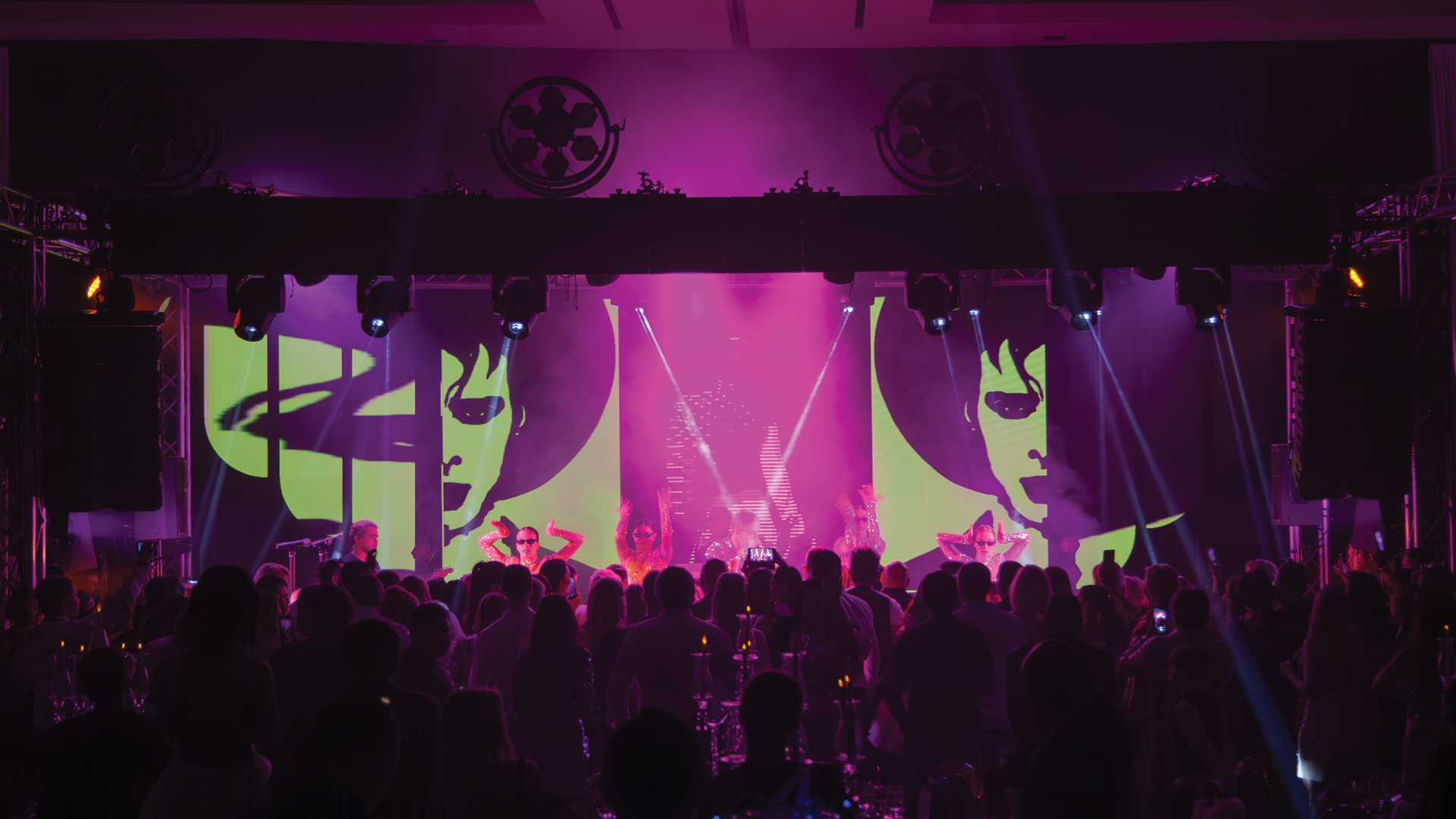
At 8:23 PM—eighty-three minutes after the power failure—the CEO took the stage. The reduced lighting provided dramatic silhouettes rather than the planned full-color design. The repositioned PA system delivered clean audio to the front seventy percent of the crowd. The LED wall blazed with product imagery, drawing every eye forward. The audience perceived only deliberate design choices—an industrial aesthetic matching the venue’s character.
The announcement proceeded without incident. When the CEO revealed the startup’s new product—a genuinely innovative approach to renewable energy storage—the crowd’s enthusiasm was authentic. The reduced lighting rig pulsed in celebration, the subwoofers drove the celebration music, and three thousand people left convinced they’d experienced a brilliantly designed event. Behind the FOH position, the crew exchanged exhausted glances that communicated volumes.
Lessons from the Chaos
The post-mortem analysis identified multiple lessons for future productions. First: never accept venue assurances about power capacity without independent verification. A qualified electrician should load-test circuits before any significant production commits to a non-traditional venue. Second: budget for redundancy. The UPS systems and generator investment that protected video proved their value many times over.
Third: invest in team relationships. Technical skill matters, but the ability to communicate effectively under pressure matters more. Crews that train together, debrief honestly, and build mutual trust outperform collections of talented individuals who haven’t developed that rapport. Fourth: design shows with degradation pathways. Knowing how to reduce a production while maintaining core functionality isn’t just useful for emergencies—it’s a fundamental professional skill.
The crew that survived that night became legend in their regional production community. They continued working together, their shared experience creating bonds that transcended typical professional relationships. The production manager still keeps a photo from the load-out—exhausted faces illuminated by work lights, every person wearing expressions that mixed pride with disbelief. In live event production, nights like this are the crucible where professionals discover what they’re truly capable of achieving.
