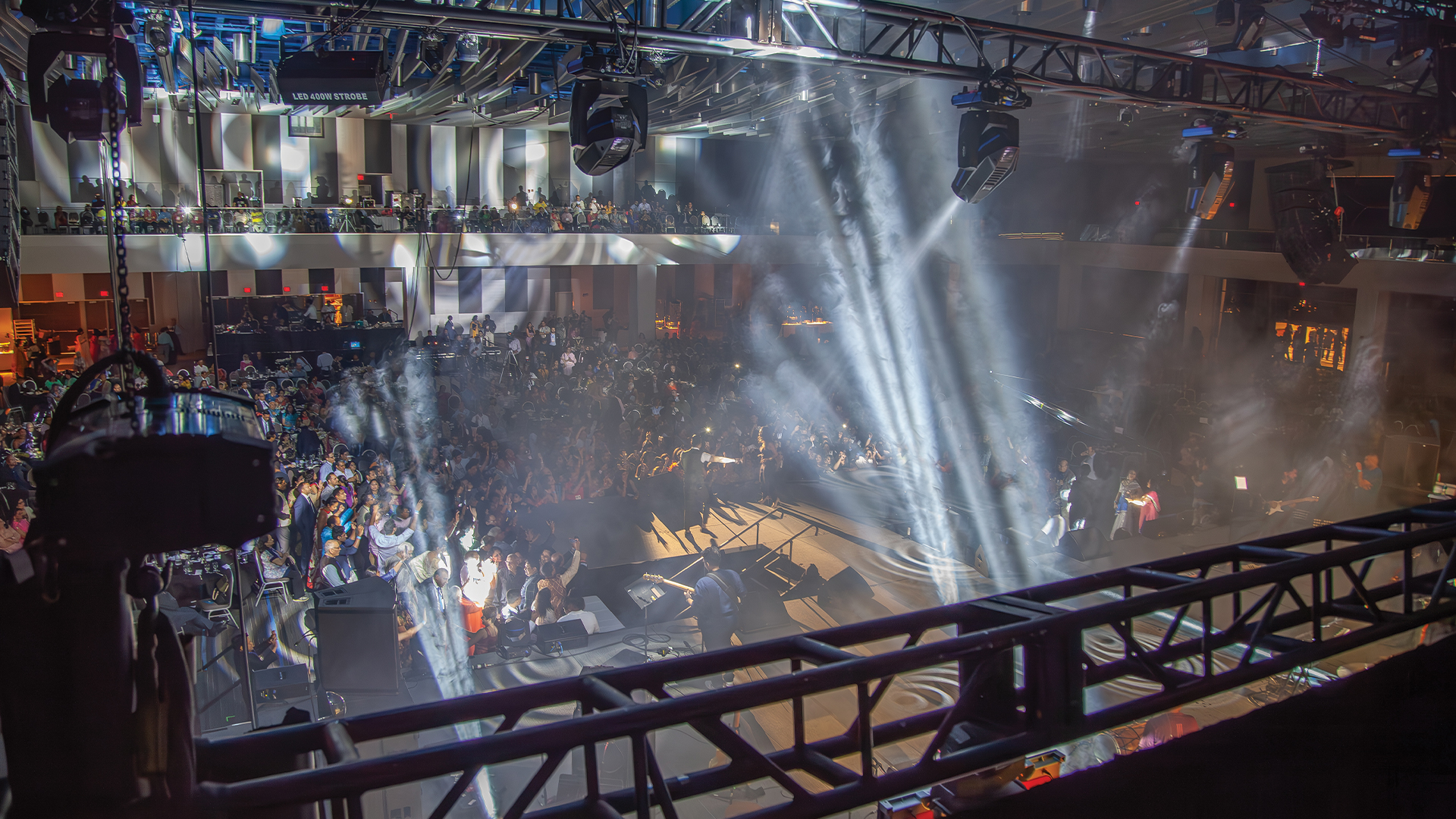
Structural Adventures in Live Entertainment
When Aluminum Gets Ambitious
Tyler GT Truss and Tomcat Truss systems support thousands of shows nightly around the world. Their engineering specifications are conservative, their safety factors generous. Structural engineers who design these systems account for loads well beyond expected values. Yet in the dynamic environment of live entertainment, truss occasionally decides to move in ways nobody anticipated, transforming from passive structure into active participant.
The physics of truss behavior under load are well understood. Static loads from fixtures and dynamic loads from performers on rolling carts can be calculated precisely. Wind loads on outdoor structures follow established models. What proves difficult to predict is how these loads interact in specific combinations, especially when environmental factors introduce unexpected variables.
The 2020 Arena Incident
During a major pop artist’s arena tour, a custom truss system designed by TAIT began oscillating during a climactic number. The movement was small initially, perhaps half an inch, but it increased throughout the song until the entire structure was swaying visibly. Load cells showed no unusual readings. The motion control system reported normal operation. Yet the truss was dancing.
Emergency protocols activated immediately. The show caller reduced motor movements to minimize excitation. The rigging supervisor prepared emergency lowering procedures. The production manager contacted venue management about potential evacuation. All while the show continued, audience unaware of the drama occurring above them.
Post-incident analysis identified resonance as the cause. The tempo of the music, combined with audience movement and the natural frequency of the truss structure, created a feedback loop that amplified small motions into visible oscillation. The solution involved adding damping to break the resonance cycle.
Wind and Outdoor Challenges
Outdoor productions face structural challenges that indoor shows never encounter. Stageco ground support systems and Mountain Productions roof structures are engineered for significant wind loads, but wind behavior is fundamentally unpredictable.
Vortex shedding occurs when wind passes around cylindrical objects like truss chords, creating alternating pressure zones that can induce vibration. The phenomenon is well-documented in bridge engineering but less commonly addressed in temporary entertainment structures. When conditions align, truss can begin “singing” in the wind, producing audible tones while moving in patterns that concern observers.
Guy wire systems help stabilize outdoor structures against wind loads, but they introduce their own dynamics. Improperly tensioned guys can allow structures to move more than intended. Over-tensioned guys can create stress concentrations that lead to unexpected behavior. The rigging crew must balance these competing concerns, usually under time pressure during load-in.
The Mechanics of Movement
Chain hoists from CM Lodestar, Verlinde, and Prolyft lift and position truss with remarkable precision. Modern entertainment rigging can place loads within millimeters of intended positions. Yet this precision can create false confidence about system behavior.
Thermal expansion affects truss position throughout shows. A 100-foot truss span can grow measurably as lighting fixtures heat the aluminum. This growth must be accommodated, or it will impose forces on connections designed for static loads. Expansion joints similar to those used in bridges sometimes appear in large touring systems.
Creep refers to slow deformation under sustained load. While aluminum is generally resistant to creep at normal temperatures, long-term touring rigs can develop slight permanent deformations that affect assembly and alignment. Experienced production riggers learn to recognize these changes and accommodate them during setup.
Historic Structural Adventures
The 1988 Iron Maiden World Slavery Tour featured an elaborate stage set with extensive truss work that became legendary among road crews. Stories persist of structures that seemed to move intentionally during shows, though the specific causes were never definitively identified. The crew developed rituals around setup, treating the metal with respect that bordered on superstition.
Pink Floyd’s Division Bell Tour in 1994 employed some of the most sophisticated structural engineering ever applied to touring production. Yet even this show, designed by leading entertainment engineers, experienced moments of unexpected truss behavior. The scale of the production created interactions between components that no simulation had predicted.
The Super Bowl halftime shows push structural engineering to its limits, with setup and teardown occurring in minutes rather than hours. The NFL and halftime production teams have developed protocols through hard experience, each year’s structural design informed by lessons from previous years’ unexpected behaviors.
Living With Structural Uncertainty
The entertainment rigging industry has developed extensive safety protocols precisely because structural behavior can be unpredictable. PLASA and ESTA standards provide guidelines that incorporate significant safety margins. Insurance requirements mandate regular inspections and engineer certifications.
Modern monitoring technology provides real-time awareness of structural behavior. Load cells on every motor point track forces continuously. Accelerometers detect unexpected motion. Data logging captures conditions that can be analyzed if problems occur. This technology supplements but cannot replace human vigilance.
The professional rigger’s most important tool remains observation. Experienced hands notice subtle changes in how structures look and feel. They sense when something isn’t quite right before any sensor confirms their concern. This intuition, developed through years of working with aluminum under load, represents irreplaceable institutional knowledge.
Truss will continue occasionally surprising its operators. The interaction of load, temperature, vibration, and time creates conditions that exceed the predictive capacity of even sophisticated engineering. The response is not panic but preparation: protocols that address unexpected behavior safely, training that equips crews to recognize and respond to problems.
