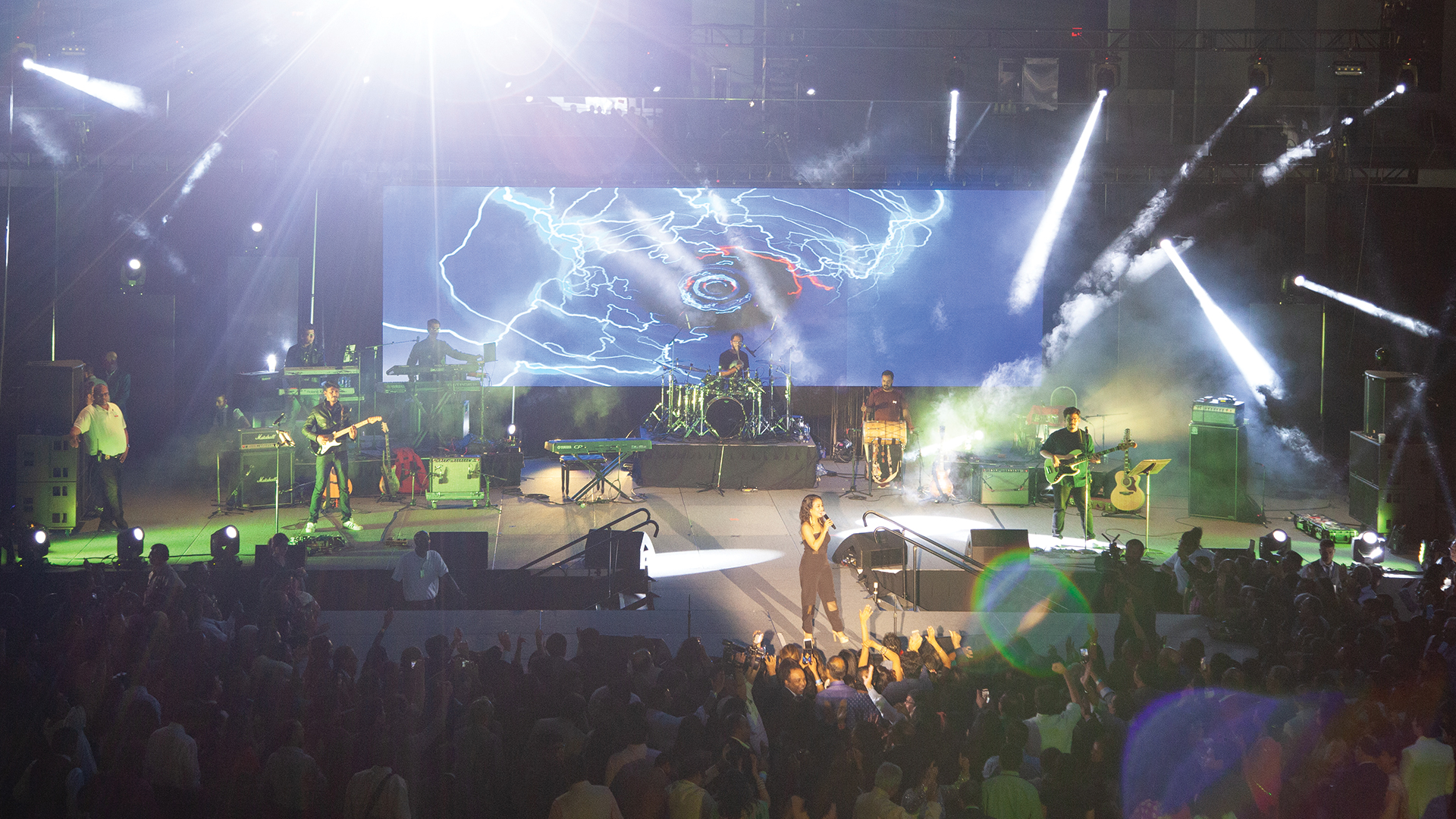
Every live event technician has witnessed the moment when technology decides it has creative opinions. In the AV production world, fog machines rank among the most temperamental divas on any equipment roster devices that seem determined to direct their own atmospheric narratives regardless of what the lighting designer actually planned.
When Glycol Gets Ambitious
The MDG ATMe atmospheric generator sits backstage like an industrial-grade dream machine, waiting to blanket stadium floors in ethereal white clouds. But seasoned stage managers know the truth: these units possess an uncanny ability to decide when dramatic moments should occur. Your carefully programmed DMX cues become suggestions rather than commands.
Back in 1979, when Rosco introduced the first portable fog machine for theatrical use, nobody anticipated that these devices would develop such strong personalities. The original units ran on oil-based fluids that left residue on everything within a fifty-foot radius—equipment, costumes, the drummer’s cymbals. Today’s water-based atmospheric fluids from manufacturers like Ultratec and Froggy’s Fog have eliminated most of that residue problem, but they haven’t eliminated the machines’ tendency toward autonomous artistic expression.
The HVAC Conspiracy
Venue HVAC systems and fog machines maintain an adversarial relationship that would make rival sports teams look friendly. Picture this scenario that plays out at corporate events worldwide: the production coordinator has meticulously positioned four Look Solutions Unique 2.1 hazers around the ballroom perimeter. The lighting designer has spent three hours programming a subtle atmospheric wash that will make the CEO’s entrance feel like a scene from a prestige television drama.
Then the building’s climate control kicks into high gear because four hundred attendees have raised the room temperature by twelve degrees. Suddenly, your carefully planned low-lying fog becomes a weather system. The haze migrates toward the air returns like it’s late for a connecting flight, leaving the stage completely clear while the emergency exits disappear into what looks like a horror movie set.
Pressure, Temperature, and Betrayal
Understanding fog machine physics requires accepting that these devices operate on principles that seem to shift based on venue karma. The heat exchanger inside a professional unit like the Antari F-7 Fazer or the Martin JEM ZR45 heats fluid to precisely calibrated temperatures. In theory. In practice, these temperatures fluctuate based on factors that engineers struggle to explain and technicians learn to accept through bitter experience.
Altitude affects output density. Humidity transforms light haze into pea-soup conditions. The barometric pressure that arrives with an approaching storm front can turn your cracked-oil cracker into a machine that produces fog with the consistency of cotton candy. One veteran lighting director who has toured with arena shows since the 1990s swears that his equipment performs differently on full moons—and he’s only half joking.
The Art of Atmospheric Negotiation
Successful fog deployment demands treating these machines as collaborative partners rather than obedient tools. Load-in should include what experienced crews call environmental reconnaissance—mapping air currents, identifying return vents, locating the thermostat that some venue employee will inevitably adjust mid-show.
The Chauvet Professional Vesuvio RGBA combines fog generation with LED illumination, essentially building the conspiracy between atmospheric and lighting systems directly into the hardware. This integration helps, but it doesn’t eliminate the fundamental truth of atmospheric effects production: fog goes where fog wants to go.
Strategic Fluid Selection
Choosing the right fog fluid matters enormously, yet many production companies grab whatever glycol-water mixture sits nearest the loading dock. High-density fluids create thick, lingering clouds ideal for concert moments where the artist disappears into dramatic mist. Quick-dissipating formulations suit corporate events where visibility matters more than atmosphere. Glycerin-based fluids produce smaller particles that scatter light more efficiently, making beam effects pop against the haze.
The legendary 1985 Live Aid concert at Wembley Stadium demonstrated fog’s dual nature when atmospheric effects intended to enhance Queen’s performance instead created a visual barrier that cameras struggled to penetrate. Freddie Mercury performed ‘Bohemian Rhapsody’ while technicians frantically adjusted equipment, a reminder that even the most iconic moments in live production history involve battles with fog machines that have their own ideas about showtime.
Maintenance Rituals and Machine Psychology
Regular fog machine maintenance follows protocols that manufacturers publish but experienced technicians supplement with practices that border on superstition. Flushing heat exchangers with distilled water after every use prevents residue buildup. Inspecting pump seals catches failures before they strand you mid-performance. Storing units at consistent temperatures keeps internal components from developing the kind of temperament that leads to opening-night surprises.
The Le Maitre G300 Smart represents the current state of intelligent atmospheric equipment, with onboard diagnostics that report fluid levels, heater status, and operational hours. Yet even these sophisticated units occasionally decide that the third song in the setlist requires spontaneous fog intervention regardless of what the show control system says.
Embracing Atmospheric Autonomy
The most successful AV production professionals approach fog machines with a philosophy that balances technical precision with philosophical acceptance. You can control fluid type, output volume, placement, and timing. You cannot control how atmospheric particles interact with venue architecture, audience movement, thermal currents, or the inexplicable preferences these machines develop over years of service.
Perhaps fog machines that create their own scenes are not malfunctioning—they are collaborating. Every unexpected atmospheric moment becomes part of the live event narrative, a reminder that productions involve far more variables than any control console can manage. The fog knows something the programming does not, and sometimes its creative instincts improve the show.
After all, the most memorable productions often include moments nobody planned—and fog machines excel at delivering exactly that kind of unrehearsed magic.
