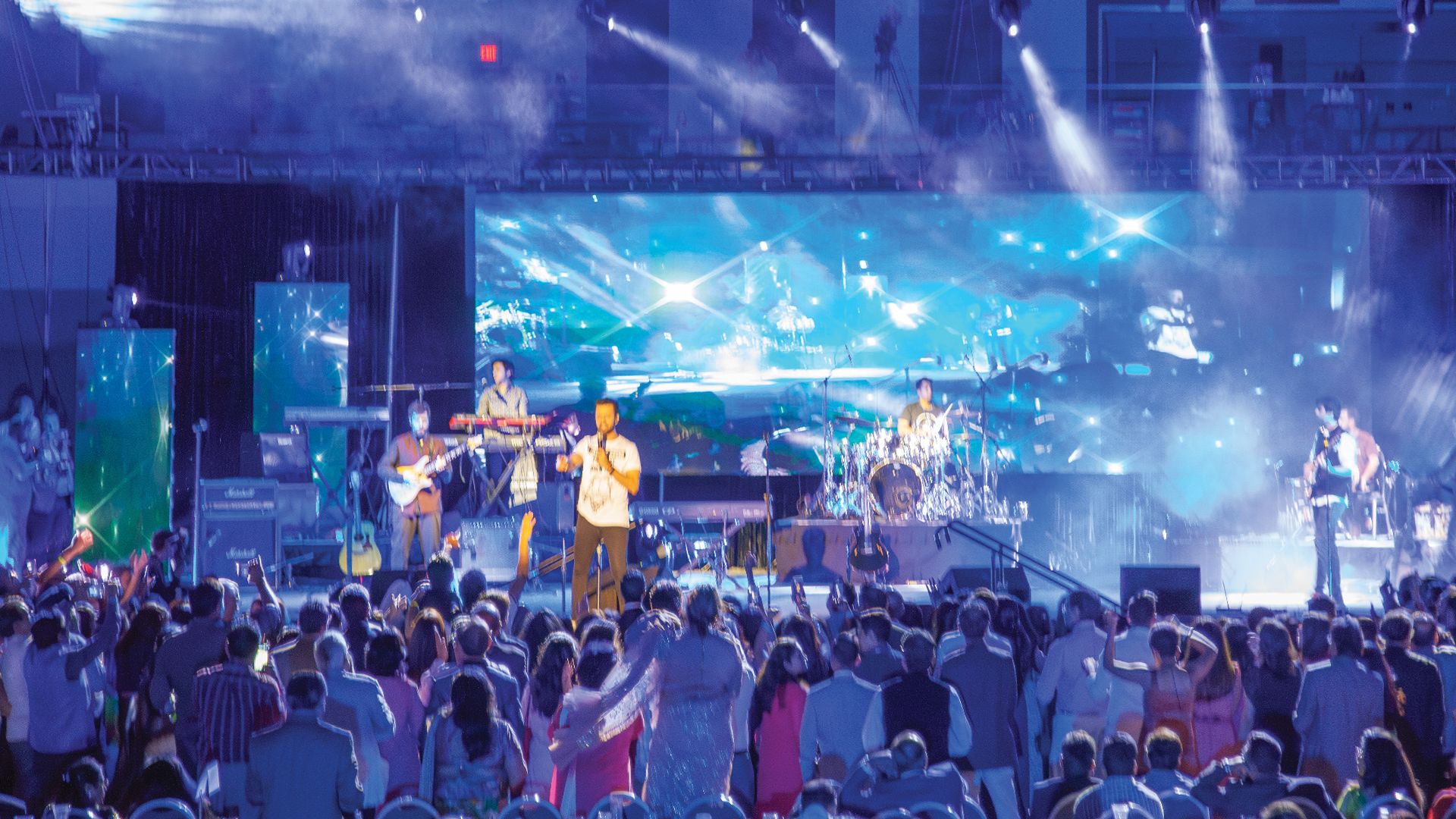
The ceiling above the audience comes alive—waves of color ripple across overhead panels like aurora borealis contained within a ballroom, transforming the space from ordinary venue to immersive environment. Yet there’s no elaborate truss grid overhead, no forest of motors and cables that would typically enable such effects. Lightweight LED ceiling systems have arrived, bringing dynamic overhead experiences to venues where traditional rigging was never feasible.
The Traditional Rigging Barrier
Conventional LED ceiling installations required substantial infrastructure that many venues couldn’t provide. Structural engineers calculated point loads, venue managers commissioned rigging inspections, and production companies budgeted for motor controllers, power distribution, and the labor hours necessary to transform raw components into coherent displays. Hotel ballrooms with decorative ceilings, historic venues with preservation restrictions, and modern spaces designed without production rigging remained effectively off-limits.
The weight equation drove many decisions. Traditional LED panels like early generation Christie MicroTiles or legacy rental inventory from major manufacturers specified weights exceeding fifteen pounds per square foot including mounting hardware. Covering even modest ceiling areas demanded rigging capacities measured in tons—infrastructure investments that venue operators rarely justified for occasional special events.
The Lightweight Panel Revolution
Recent product development has transformed ceiling LED possibilities. Manufacturers including ROE Visual, Unilumin, and Absen now offer panels weighing under eight pounds per square foot while maintaining broadcast-quality specifications. These weight reductions come from carbon fiber frame materials, thinner LED module substrates, and optimized power supply designs that shed unnecessary mass without sacrificing performance or reliability.
The CB2 panel series from ROE Visual exemplifies this evolution. Weighing just 5.7 pounds per square foot, these panels mount using proprietary quick-connect hardware that eliminates traditional rigging complexity. Production crews report installation times reduced by sixty percent compared to legacy equipment, translating directly to labor cost savings that offset premium panel pricing over typical rental cycles.
Alternative Mounting Methodologies
Lightweight panels enable mounting approaches impossible with heavier equipment. Tension grid systems—essentially strong fabric stretched between anchor points—support distributed loads from lightweight panels without concentrated point loads that trigger rigging inspections. Companies like ShowTex manufacture specialized fabrics engineered for these applications, combining strength with flexibility that accommodates panel attachment across expansive areas.
Free-standing tower systems offer rigging-independent ceiling coverage for ground-supported configurations. These structures, engineered by firms like Area Four Industries and Total Structures, create ceiling grids through vertical elements distributed across venue floors. While occupying footprint space, they eliminate overhead rigging requirements entirely—particularly valuable in venues where ceiling access simply doesn’t exist.
Content Design for Overhead Viewing
Ceiling-mounted LED panels demand content designed specifically for overhead viewing angles. Imagery that reads perfectly on vertical surfaces can appear distorted, inverted, or simply confusing when viewed from below. Content creators working in platforms like Resolume Arena and TouchDesigner develop overhead-specific libraries featuring abstract patterns, atmospheric effects, and geometric animations that maintain impact regardless of viewer positioning beneath the installation.
Motion direction particularly impacts ceiling content effectiveness. Radial patterns emanating from center points create expansive sensations that enlarge perceived space. Rotational animations risk inducing vertigo in sensitive viewers if speeds exceed comfortable thresholds. The sweet spot involves subtle movement—gradual color shifts, gently traveling patterns, and ambient variations that enhance environments without demanding constant attention.
The Kinetic Ceiling Dimension
Beyond static mounting, kinetic systems add physical movement to lightweight LED ceiling installations. Winch systems from manufacturers like TAIT and Kinesys raise and lower panels throughout events, creating three-dimensional dynamics impossible with fixed mounting. The weight reductions in modern panels make these kinetic applications accessible in venues that couldn’t support movement of heavier legacy equipment.
Synchronized movement patterns transform ceiling panels into performance elements rather than mere decoration. Choreographed lowering during keynote reveals, wave patterns rippling across audience areas during musical performances, or slow descents that gradually enclose spaces create memorable moments impossible through video content alone. The combination of motion graphics on LED surfaces with physical panel movement produces layered experiences that fully exploit these technologies’ combined potential.
Safety Protocols for Overhead Installations
Despite reduced weights, overhead LED installations demand rigorous safety attention. Secondary attachment systems—backup cables connecting panels to structure independently from primary mounting—provide redundancy that prevents panels from reaching audiences even if primary attachments fail. Industry standards established by organizations like ESTA mandate these safety measures regardless of panel weight or mounting methodology.
Regular inspection protocols ensure ongoing safety across multi-day events. Technical directors implement daily verification checklists confirming attachment integrity, cable connections, and structural stability before audiences enter venues. This disciplined approach, borrowed from theatrical production practices refined over decades, maintains safety standards that protect both audiences and production companies from incidents that could end careers and businesses.
