Freedom from Infrastructure: Wireless LED and the New Live Event Frontier
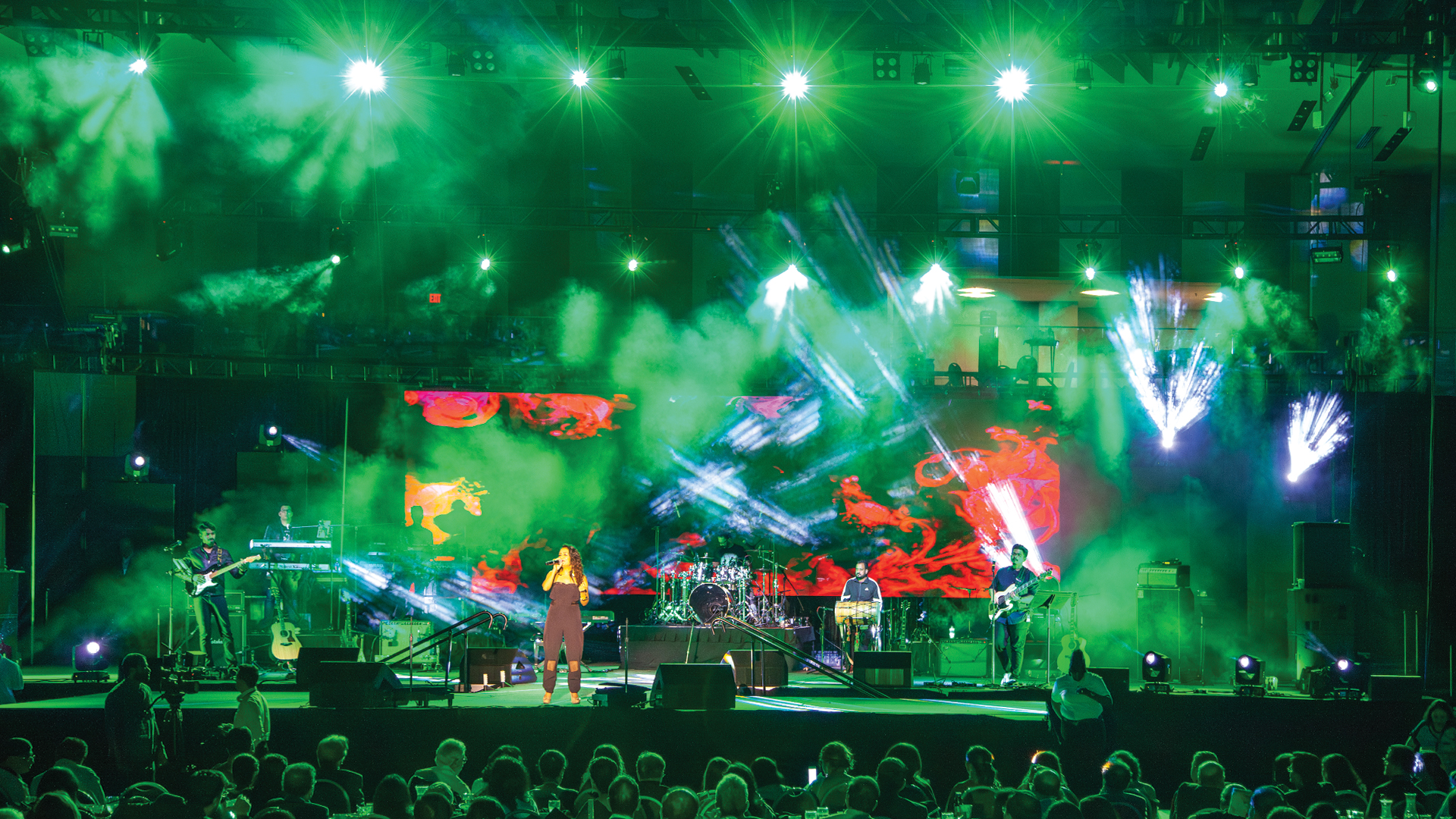
The pop-up concert has become one of the most culturally potent formats in contemporary live entertainment. Dua Lipa performing atop a London rooftop for a surprise session. Billie Eilish appearing at a pop-up in a Los Angeles parking structure. Brand activations in urban spaces where a 500-person crowd assembles with 24 hours notice. The common thread enabling all of these events is Astera wireless LED technology, which eliminated the infrastructure dependency that previously made spontaneous, location-flexible lighting production impossible.
Before wireless fixtures existed at performance quality levels Astera achieved, pop-up events were constrained to the simplest possible lighting: battery-powered PAR cans, rechargeable work lights, or available ambient light. Any fixture requiring controllable intensity, color mixing, or animation required power and data cable infrastructure that transformed a genuinely spontaneous location into a miniature venue load-in. The Astera Titan Tube, AX3 LightDrop, AX5 TriplePar, and NYX Bulb changed the calculation fundamentally.
The Technology Stack for Zero-Infrastructure Events
A complete zero-infrastructure pop-up lighting rig using Astera technology requires nothing beyond the fixtures themselves, a Bluetooth or Wi-Fi enabled tablet running the AsteraApp, and the ARC3 RF transmitter for larger deployments. There is no power distribution, no DMX cable, no dimmer rack, no data node. The entire rig loads in transit cases, deploys in minutes, and strikes equally quickly — a logistical profile that matches the operational requirements of events where venue access windows may be measured in hours rather than days.
For events requiring higher production value within the pop-up format, Astera fixtures integrate with professional console control via ArtNet over Wi-Fi. A GrandMA3 compact or Chamsys MQ80 console running on the same Wi-Fi network as the ARC3 transmitter provides full DMX control with console-level programming capability. Productions have successfully deployed this architecture in spaces ranging from underground car parks to rooftop gardens to shipping container installations at art festivals.
Fashion, Streaming, and Corporate Sectors
The fashion industry has embraced Astera wireless fixtures for runway show pop-ups and showroom installations. London Fashion Week and Milan Fashion Week productions by companies including Seen Displays and Propaganda London have used Astera Titan Tubes as runway borders, Astera NYX Bulbs as pendant lighting in temporary showroom spaces, and Astera PixelTubes as dynamic architectural accents in converted warehouse venues — all deployed without touching the building power infrastructure.
Music streaming platforms including Spotify and Apple Music have become among the most active commissioners of pop-up concert experiences as subscriber acquisition strategies. These events, filmed for streaming content as well as attended live, require lighting quality equivalent to a professional music video production within a pop-up logistical footprint. Astera wireless systems have become the default specification for these productions, enabling Spotify Listening Parties and Apple Music Sessions to achieve broadcast-quality environments without the budget implications of full wired infrastructure.
Urban Space Activation and the Guerrilla Production Model
Astera wireless fixtures have enabled a guerrilla production model in which small independent teams create high-quality live event experiences in urban spaces with minimal lead time and zero permanent infrastructure dependency. Underground music collectives in Berlin, Bristol, and New York have used Astera systems to stage events in spaces as diverse as disused tunnels, rooftop water towers, and night market food halls — creating memorable aesthetic environments for audiences who expect more from independent events than a hired room with functional lighting.
The cultural significance of wireless LED technology for independent and grassroots live culture is difficult to overstate. The democratization of production quality that Astera products represent has lowered the barrier to high-quality live event production in ways that continue to find new creative applications. Pop-up concerts were possible before Astera; pop-up concerts with spectacular, controllable, broadcast-quality lighting environments were not. That distinction has changed the creative ambition of independent live culture in ways the industry is still absorbing.
The Logistics of Spontaneity
The apparent spontaneity of a well-executed pop-up concert conceals significant logistical precision. Battery charging schedules must be managed to ensure full charge at deployment, RF frequency coordination must account for other wireless systems in dense urban environments, and weather contingencies must address exposed fixture deployments. Production companies and freelance technicians specializing in pop-up format events have developed operational playbooks — 4-hour deployment checklists, emergency fixture substitution protocols, audience safety assessment frameworks for non-standard venues — encoding the accumulated experience of hundreds of pop-up productions into repeatable best practice. The Astera ecosystem is the enabling technology; the operational discipline is what makes it consistently deliver.
